
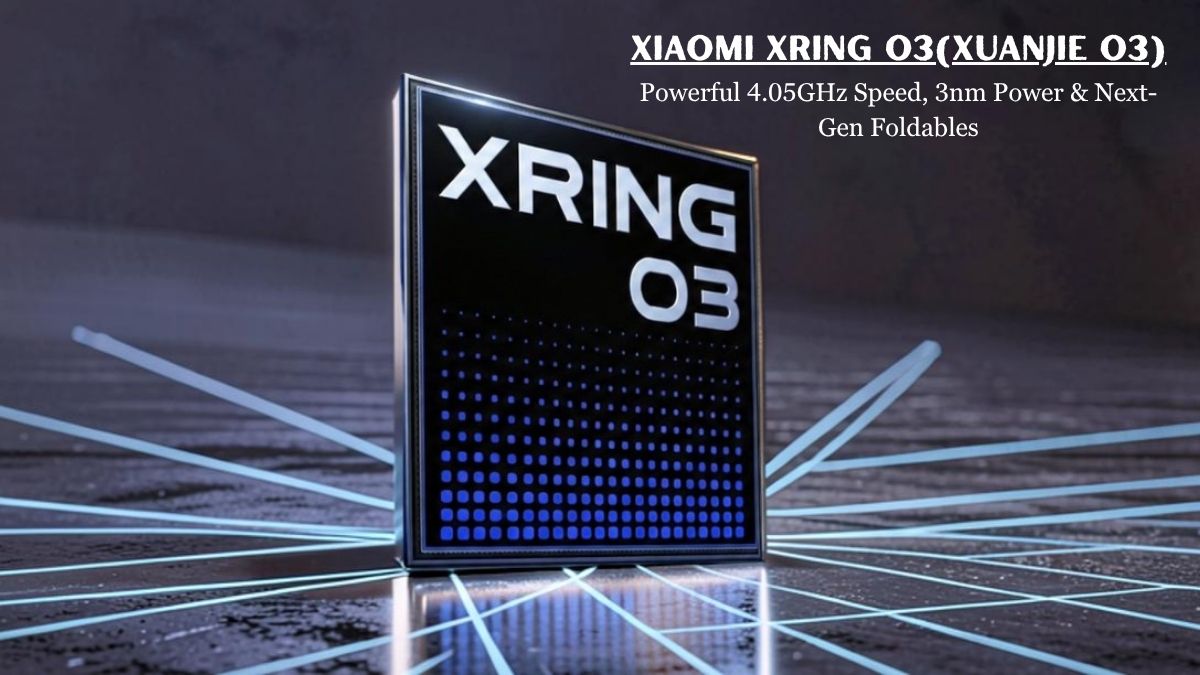
Xiaomi is quietly preparing a major transition in its custom silicon journey with the upcoming XRING O3 (known as Xuanjie O3 in China) chipset. According to early leaks, this upcoming generation of SoC is not just about higher clock speeds; it represents a rethinking of mobile CPU architecture, particularly for high-end foldable devices and those designed for heavy multitasking devices. If these details hold, Xiaomi may be entering a new league of performance-oriented chip design. This chip is designed to succeed the previous Xuanjie series chips.
Designed for Foldables & Heavy Workloads
Interestingly, this chip will be designed for next-gen foldable devices, particularly the upcoming Xiaomi MIX Fold 5 (codename Lhasa). It is optimized for multitasking across large foldable displays, better app switching and background processing, and strong GPU uplift for high-resolution inner screens. This aligns with Xiaomi’s increasing focus on high-end foldable experiences instead of just slab smartphones.
A New Architecture Philosophy
Instead of sticking with the traditional multi-tier “big-medium-little” core structure, XRING O3 presents a simplified 3-cluster design:
- Prime Core (4.05GHz) – built for peak performance bursts
- Titanium Cores (3.42GHz) – sustained high-performance layer
- Little Cores (3.02GHz) – unusually powerful efficiency cores
Performance Gains That Stand Out
On paper, the improvements look aggressive and targeted:
- Prime core crosses the 4.05GHz (4051 MHz) barrier, a milestone for smartphones
- Efficiency cores jump by around 68%, now exceeding 3.02GHz (3024 MHz)
- GPU frequency rises to ~1.49GHz (1497 MHz), suggesting smoother gaming and UI
- Memory bandwidth stays at 9600MT/s, ensuring consistent throughput
This combination hints at a chipset that doesn’t just peak higher, but also sustains performance more effectively across tasks.
Built on Advanced 3nm Process
XRING O3 is expected to be manufactured using TSMC’s N3P 3nm node, which should bring:
- Better thermal efficiency
- Lower power consumption under load
- Improved performance-per-watt ratio
In real-world usage, this could translate into cooler devices even during gaming, video editing, or extended multitasking sessions.
Expected Pricing & Positioning
If Xiaomi sticks to its usual premium foldable approach, devices powered by XRING O3, such as the MIX Fold 5, which might be priced at approximately $1,500, will be positioned securely within the ultra-premium category.
Final Thoughts
While these are still early leaks, the XRING O3 appears to be more than a standard upgrade. By removing traditional core tiers and significantly boosting efficiency cores, Xiaomi might be aiming for a chipset that balances raw power with real-world usability.