
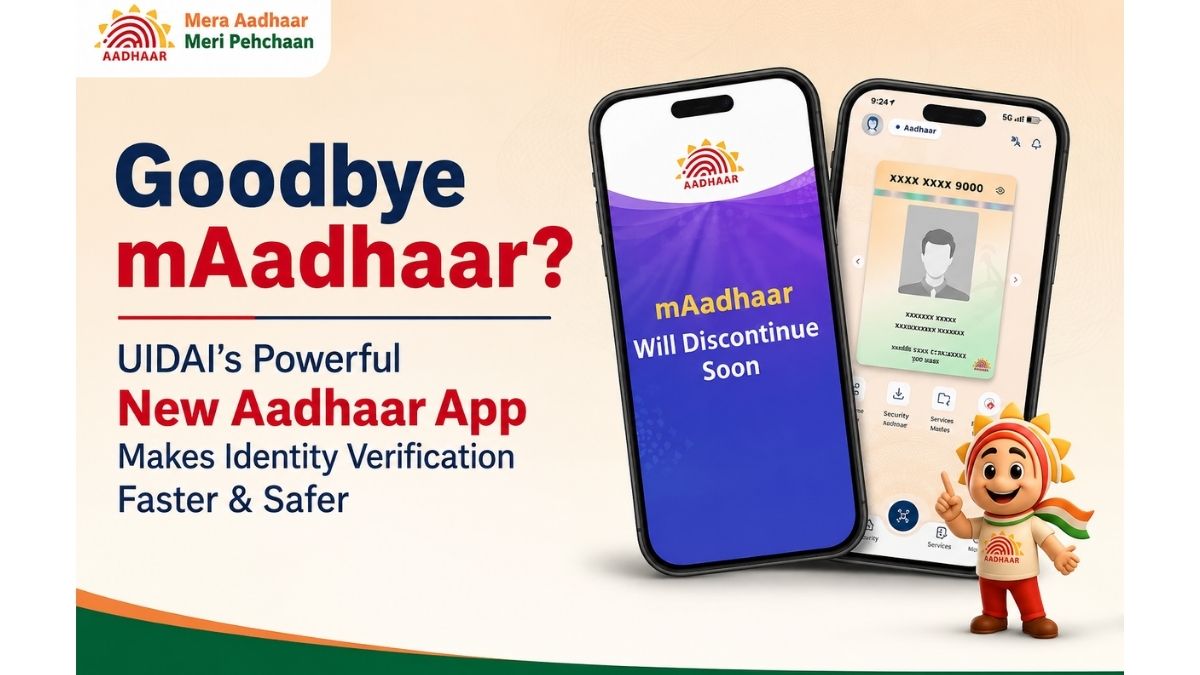
The Unique Identification Authority of India (UIDAI) is now preparing to phase out the old mAadhaar app and replace it with a redesigned Aadhaar App that focuses on privacy, security, and faster digital verification. With the new platform, Aadhaar verification in India could soon feel as simple as scanning a QR code or unlocking your phone with your face.
The new Aadhaar App, identified by its “Pehchaan” logo on Android and iOS, is built around a much more modern approach to digital identity. Instead of revealing your entire Aadhaar information each time verification is required, the application implements selective data sharing, enabling users to share only the information necessary for a specific purpose.
Whether it is hotel check-ins, office entry, SIM verification, or travel identification, users will no longer need to hand over photocopies containing their full Aadhaar number and personal details. QR-based offline verification and masked Aadhaar sharing are expected to make the process both safer and faster.
One of the biggest features is the addition of built-in Face Authentication and biometric security. Users can now approve authentication requests with a quick facial scan, adding another layer of protection against identity misuse and fraud. UIDAI has also included biometric lock and unlock options directly inside the app, giving users more control over how their Aadhaar data is accessed. This shift comes at a time when digital fraud and unauthorized data sharing concerns are growing rapidly across India.
Users can manage up to five Aadhaar profiles from a single device, provided all profiles are linked to the same registered mobile number. This feature could make Aadhaar management easier for families in which parents often handle identity verification for their children or elderly relatives. UIDAI has additionally expanded accessibility with support for 13 Indian regional languages, helping the app reach users across different states and language preferences.
Why is UIDAI replacing the mAadhaar App?
The old mAadhaar app primarily served as a digital storage wallet for Aadhaar cards. Still, UIDAI now wants Aadhaar verification to be consent-based, privacy-focused, and compliant with India’s Digital Personal Data Protection (DPDP) Act. The redesigned app reflects a major shift in how digital identity will work in the future, where users stay in control of their personal information instead of repeatedly sharing full documents everywhere.
If adopted widely, the new Aadhaar App could fundamentally change identity verification across India by reducing paper dependency, improving security, and making digital authentication much smoother for everyday users.